Prepare for the disruptions that are realistic where you live
Start with a household baseline, then add hazard-specific decisions. Most emergencies eventually become familiar household problems: no power, unsafe water, lost refrigeration, communication failure, sanitation limits or the need to evacuate.
Plan the hazard-specific decisions before conditions deteriorate
Use the scenario guide for the event, then follow the household problems it creates.

Power Outage Preparedness
Plan for lighting, communication, food safety, water, medical needs and selective backup power.
Plan this scenario →
Hurricane Preparedness
Plan alerts, evacuation, water, documents, pets and post-storm risks before conditions deteriorate.
Plan this scenario →
Winter Storm Preparedness
Prepare for extreme cold, travel disruption and power loss without creating new fire or carbon-monoxide hazards.
Plan this scenario →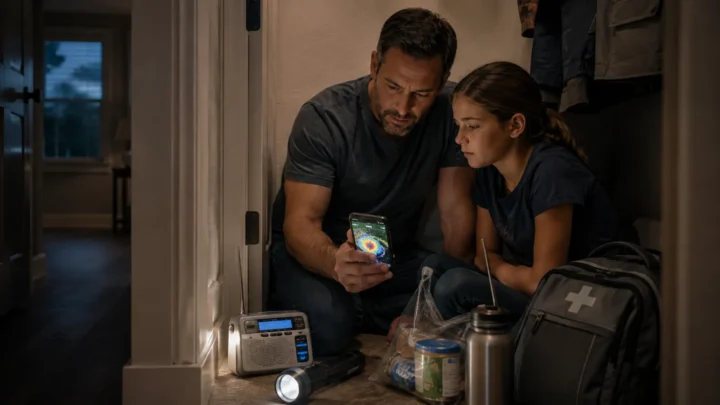
Tornado Preparedness
Choose shelter and warning methods before minutes matter.
Plan this scenario →
Flood Preparedness
Make evacuation and water-safety decisions early; never treat moving floodwater as a normal road condition.
Plan this scenario →
Wildfire Preparedness
Build an evacuation plan that can move quickly when alerts, smoke or changing conditions compress decision time.
Plan this scenario →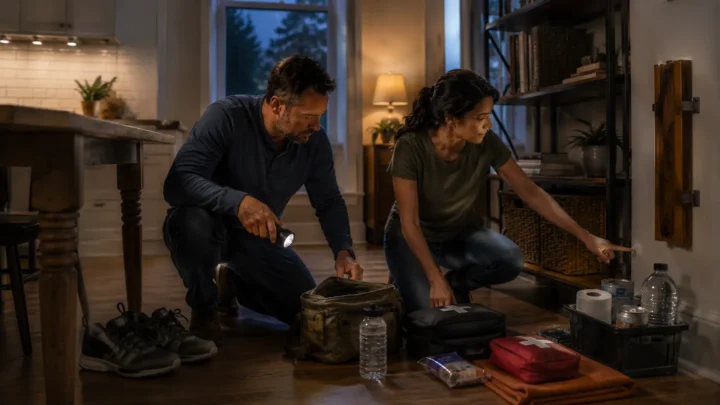
Earthquake Preparedness
Reduce falling-object hazards and know Drop, Cover and Hold On before shaking starts.
Plan this scenario →Many emergencies become the same practical problems at home
These are the recurring consequences worth planning once and reusing across hazards.
Power outage
Lighting, refrigeration, communications, medical devices and selective backup power.
Explore the problem →Water outage or unsafe water
Storage, treatment, plumbing pressure and official advisories.
Explore the problem →Water + sewer failure
Toilets, hygiene, waste and cross-contamination risks.
Explore the problem →Communication outage
Cell service, Wi-Fi, alerts and backup channels.
Explore the problem →Evacuation
Routes, destinations, documents, pets, medications and transport.
Explore the problem →Build the baseline once, then layer hazards on top
Water, food, communication, medications, sanitation and household-specific support needs recur across many scenarios. That is why PrepMorrow separates the household baseline from hazard modules: you should not have to rebuild the same plan for every storm or outage.
Move from scenario to household action
Use Prep Check to personalize risks, the evacuation checker to close time-sensitive gaps, or the guide library to go deeper on a specific hazard.