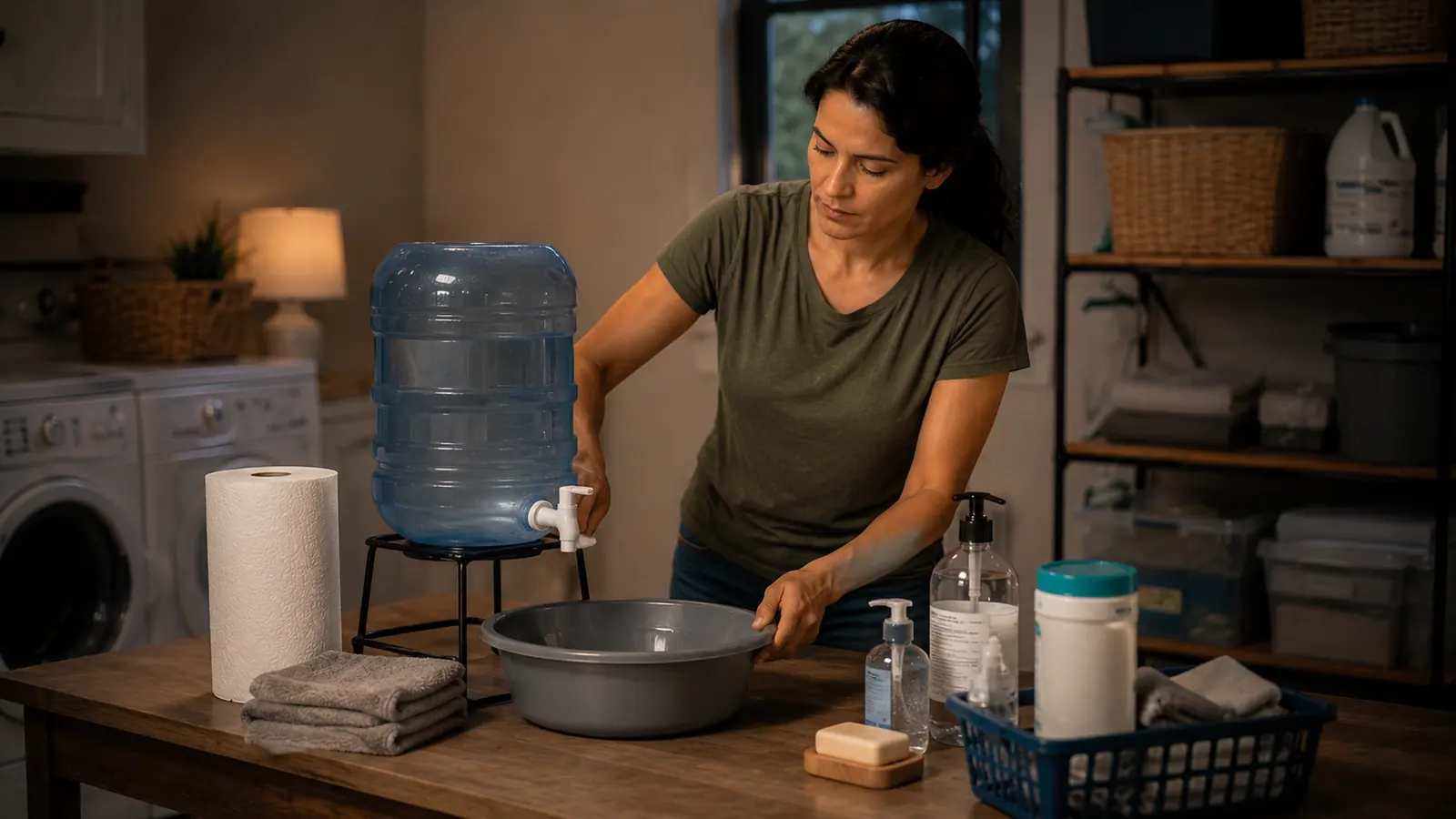
Loss of running water creates a sanitation problem long before a household runs out of food. Hand hygiene becomes harder at exactly the time people may be handling waste, cleaning storm damage or living in closer contact. A good emergency plan therefore separates drinking water from hygiene water and provides a practical way to wash hands even when a faucet does not work.
CDC says handwashing with soap and water for at least 20 seconds remains important during emergencies. When clean tap water is not available, a temporary handwashing station can be created with a water jug, and alcohol-based hand sanitizer containing at least 60% alcohol can be useful when soap and water are not available.
Decide which water is safe for handwashing
Follow local drinking-water and health guidance. During some boil-water or do-not-drink advisories, tap water may still be acceptable for handwashing, while other advisories require bottled, boiled or disinfected water. A ‘do not use’ advisory can be more restrictive. Do not apply one rule to every water emergency.
Build a simple temporary handwashing station
A basic station needs a clean container that can dispense water in a controlled stream, soap, a catch basin or drainage plan, and a clean drying method. Place it near the kitchen or sanitation area without allowing wastewater to contaminate stored drinking water or food.
A container with a spigot is easier to use than an open bucket because it reduces repeated hand contact with the water. If no spigot is available, one person can pour safe water while another washes. The goal is flowing water over the hands, not dipping hands into a shared bowl.
Use soap normally
Wet hands, apply soap, lather all surfaces including backs of hands, between fingers and under nails, scrub for at least 20 seconds, then rinse with safe water. Dry with a clean towel or air dry. Keep bar soap or pump soap where it will remain clean.
Know what hand sanitizer can and cannot do
CDC recommends an alcohol-based sanitizer with at least 60% alcohol when soap and water are not available. Sanitizer is convenient for many routine situations, but it does not eliminate every type of germ and is less effective when hands are visibly dirty or greasy. After toilet cleanup, flood cleanup or handling waste, soap and safe water are especially valuable.
Store sanitizer away from heat and flames and out of reach of young children. Supervise children according to product instructions.
Prioritize critical handwashing moments
- Before preparing or eating food.
- After using the toilet or handling human or animal waste.
- After changing diapers or helping someone with toileting.
- Before and after caring for someone who is ill.
- After flood cleanup, garbage handling or contact with potentially contaminated surfaces.
Plan wastewater disposal
A handwashing station creates used water. Do not let it pool where children or pets play or where it can contaminate food-preparation surfaces. If the sewer system is functioning, local guidance may permit normal disposal. If sewer service is disrupted, coordinate handwashing wastewater with the household’s broader sanitation plan.
Separate hygiene water from drinking water
Using drinking water for every cleanup task can deplete the supply quickly. Estimate a drinking baseline first, then add hygiene and sanitation water according to the household and scenario. Where local authorities say tap water is safe for washing but not drinking, use that distinction to conserve stored drinking water.
Infants, older adults and medical care may need more water
Diapering, wound care, feeding equipment and some medical devices can increase hygiene-water needs. Use healthcare guidance for wound care or device cleaning rather than substituting generic emergency sanitation advice.
After a boil-water advisory
When authorities lift an advisory, follow their instructions for flushing fixtures or cleaning equipment. Empty and clean a temporary handwashing container before returning it to storage so it does not become a source of contamination.
A workable handwashing setup is a container, safe water, soap and a wastewater plan. It does not need to be elaborate, but it should be ready before the faucet stops.
Add the station to Prep Check
If your household already has stored water, Prep Check can help identify whether hygiene and sanitation are still weak points. Water quantity alone does not guarantee a usable sanitation plan; dispensing, soap, waste handling and household-specific needs matter too.
Make the station usable by children and older adults
A heavy five-gallon container placed too high may be difficult to operate safely. Choose a stable setup with a reachable spigot and enough room for hands. If children use the station, supervise them so the clean-water outlet and soap stay uncontaminated.
Keep food-preparation and toilet-cleanup supplies separate
Use separate cloths, gloves and cleaning tools for sanitation work. Do not set a wastewater catch basin on a food-preparation counter. Color-coding or labeled storage bins can make this separation obvious when several people are sharing the household tasks.
Do not ration handwashing to save the last drops of water
If water is so limited that basic hygiene is being skipped, the household needs to reassess the water plan or seek an additional safe source. Diarrheal illness during an outage can increase water needs and create a much larger medical problem. Sanitation water is not a luxury line item.
Restock the station after use
After service returns, clean and dry the dispenser, basin and reusable towels before storage. Replace used sanitizer, soap, gloves and disposable towels. Recording what ran out first can improve the next version of the plan.
Estimate hygiene water before the emergency
Run the temporary station once on a normal day and measure how much water the household uses for a few handwashing cycles. The result does not need to become a rigid ration, but it gives a better idea of how much additional hygiene water to plan beyond drinking needs. A household with diapers, caregiving tasks or frequent food preparation may need substantially more than a household of two adults.
Keep the test simple and repeat it after the household changes so the estimate remains realistic.
Choose a hygiene method by the job
For visibly dirty hands, prioritize soap with safe running or poured water when available. Alcohol-based hand sanitizer is a useful fallback when hands are not visibly dirty, but does not remove all kinds of contamination. Plan a separate way to collect wastewater and prevent contamination of drinking-water containers. Follow local boil-water and do-not-use instructions.
Check where the wash water will go
Before using the station, identify both the clean-water supply and a safe wastewater route. If drains or sewer service are unavailable, follow the combined water and sewer outage plan; a catch basin is temporary collection, not a disposal permission.
Maintain the clean supply using the water storage guide. If tap water is present but under a notice, follow the advisory-use guide and the specific local instructions rather than assuming every warning prohibits or permits the same hygiene activities.
Sources & references
PrepMorrow prioritizes authoritative U.S. guidance for safety-critical preparedness information. Sources were reviewed for this guide before publication.