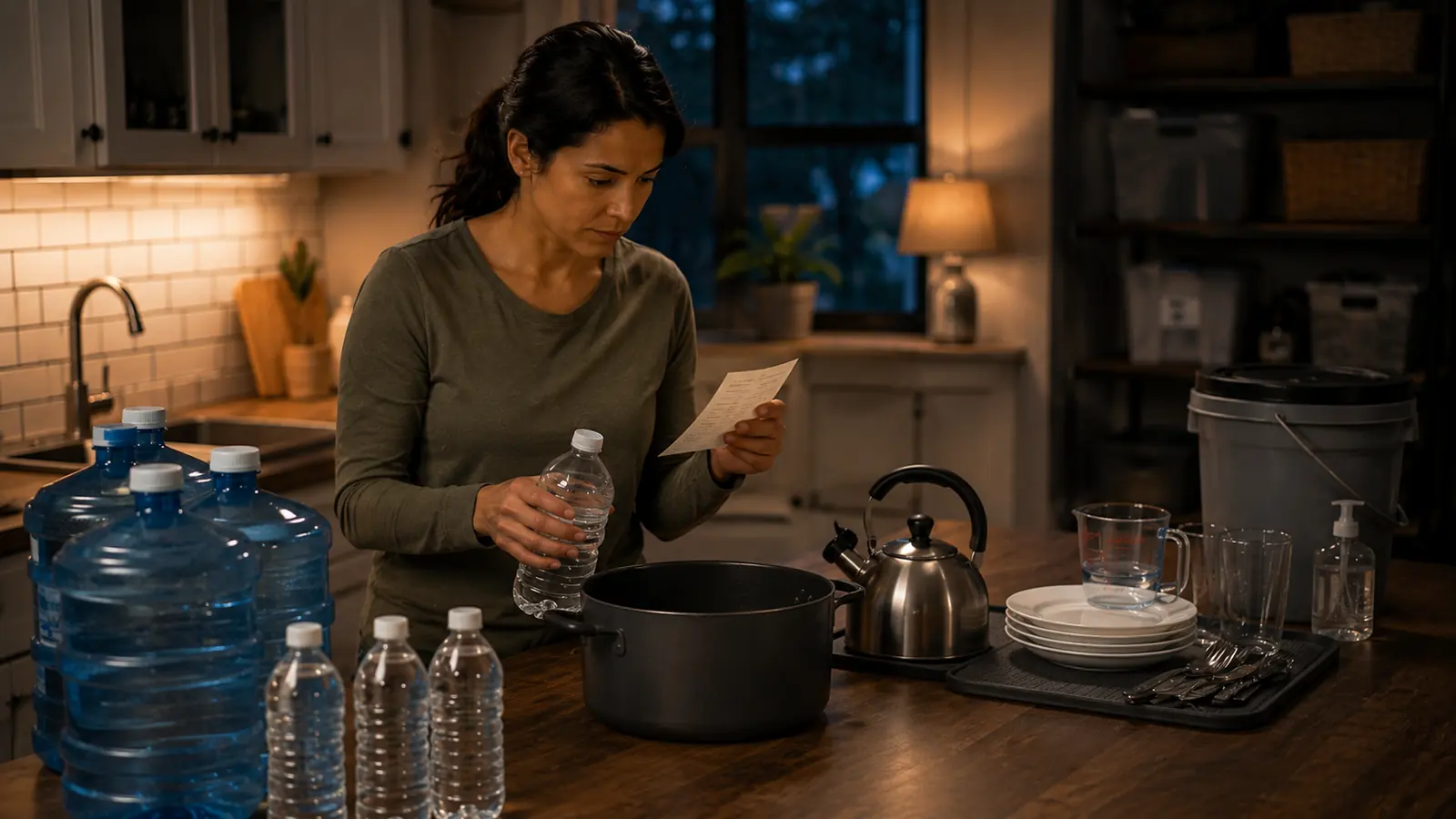
A boil-water advisory means officials believe tap water may contain disease-causing germs or that the water system cannot reliably guarantee microbiological safety. It is not the same as every other drinking-water advisory. During a boil-water advisory, use commercially bottled water or water that has been boiled according to current public-health instructions for activities where swallowing contaminated water is possible.
CDC distinguishes boil-water advisories from ‘do not drink’ and ‘do not use’ advisories. The difference matters. If officials warn about chemicals or another hazard that boiling cannot fix, do not substitute your own treatment method for the local instruction.
First identify the advisory type
- Boil-water advisory: Use bottled or correctly boiled water for drinking, oral hygiene and other uses specified by local authorities. Follow the current utility instructions.
- Do-not-drink advisory: Boiling may not make chemically contaminated water safe; obtain the alternative source officials recommend.
- Do-not-use advisory: Do not use affected tap water for any purpose while a do-not-use advisory is in effect. Follow the issuing authority’s instructions and use the recommended alternative supply.
A household filter, refrigerator dispenser or reverse-osmosis unit is not automatically a substitute for an official boil-water instruction.
Drinking and beverages
Use bottled or properly boiled water for drinking and for preparing coffee, tea, powdered drinks and other beverages. If you boil tap water, CDC recommends a rolling boil for one minute, or three minutes above 6,500 feet. Allow it to cool before use.
Cooking and food preparation
Use safe water for washing and preparing foods that will not receive enough cooking to eliminate contamination. Use safe water for infant formula, powdered nutrition products and similar preparations. Follow any additional advice from health authorities, especially for infants or people with weakened immune systems.
Do not assume that a quick rinse under advisory water is harmless because the food will later be cooked. The simplest household rule is to use safe water anywhere the water itself may become part of the food.
Brushing teeth and mouth care
Use bottled or properly boiled water for brushing teeth, rinsing the mouth and cleaning removable dental appliances. These activities make swallowing small amounts of water likely.
Ice
Discard ice made with tap water after the advisory became relevant. Turn off or avoid automatic ice makers connected to the affected water supply unless local guidance says otherwise. Make new ice only with safe water.
Home filters and refrigerator dispensers
CDC advises boiling tap water during a boil-water advisory even if it has passed through a home water filter or pitcher. Typical household filters are designed for taste, sediment or selected contaminants, not necessarily the organism responsible for the advisory.
If your refrigerator water dispenser or ice maker is connected to the municipal water supply, treat it as tap water. After an advisory is lifted, your utility or appliance manufacturer may recommend flushing lines and replacing filters.
Handwashing
Handwashing guidance can vary with the advisory and local health instructions. CDC notes that during some boil-water or do-not-drink advisories it may still be safe to wash hands with tap water, but specific local advice should control. When safe tap water is unavailable, use soap with bottled, boiled or disinfected water. An alcohol-based hand sanitizer containing at least 60% alcohol can be an alternative in many situations when hands are not visibly dirty.
Bathing and showering
Local authorities may permit bathing or showering during a boil-water advisory because the main risk is swallowing water. Keep water out of the mouth and consider extra caution for infants, young children, people with open wounds or those with medical vulnerabilities. Follow local instructions rather than assuming every advisory has identical rules.
Dishwashing
Dishwashing recommendations may depend on your dishwasher’s sanitizing temperature and the local advisory. When in doubt, use safe water and follow utility or health-department instructions. For manual washing during an advisory, public-health guidance may include a disinfection step.
Pets
Pets can also become ill from contaminated water. Give pets bottled or properly prepared safe water during a boil-water advisory unless a veterinarian or local authority provides different advice.
When the advisory is lifted
Do not immediately assume every appliance and line is ready. Follow the utility’s post-advisory instructions, which may include flushing cold-water lines, cleaning faucet aerators, dumping old ice and servicing water-treatment equipment. If you use a private well or building-specific system, the recovery steps may be different.
Treat the official advisory as the source of truth. Boiling solves many biological contamination problems, but it is not a universal treatment for every drinking-water emergency.
Prepare before the next advisory
Keep several days of stored water, a method for safely boiling water, clean containers and a way to receive local alerts. Save your water utility’s emergency contact page offline or on paper. A modest stored supply can make the first hours of an advisory much easier because you are not immediately dependent on treatment.
What about coffee makers, kettles and countertop appliances?
An appliance is only useful if it brings water to the temperature and time required by the advisory. A coffee maker that merely heats water is not automatically a substitute for the rolling-boil instruction. Electric kettles may be convenient if power is available, but confirm that the water actually reaches a full boil. When in doubt, use the method specified by public-health authorities.
Restaurants, schools and workplaces may use different procedures
Commercial kitchens, childcare facilities and healthcare settings can have stricter requirements than a household. Do not assume the steps used at home are enough for a business or care environment. Operators should follow their regulator, health department and facility emergency plan.
Make the advisory easier for the household to follow
Place a visible note near affected faucets so no one absent-mindedly fills a glass or brushes their teeth with tap water. Disable ice makers if practical and separate safe water from untreated water. Explain the rule to children and visitors. A clear household routine reduces mistakes when the advisory lasts several days.
Private wells after flooding need special attention
A boil-water advisory from a municipal utility does not cover every private well. If floodwater entered or surrounded a well, contact the local health department and follow well-disinfection and testing guidance. CDC advises treating potentially contaminated well water as unsafe until appropriate disinfection and testing have been completed.
Keep a small advisory kit with the water supply
Store a clean pot with a lid, a food-safe container for cooled boiled water, and a printed copy of current treatment instructions near the emergency water supply. If your household uses infant formula or has someone with a weakened immune system, add a note reminding caregivers to follow the healthcare provider’s or local health department’s specific instructions.
Choose the next action by the water use
If you need to prepare drinking water, follow the current local notice and the treatment-method guide. If the question is handwashing while the faucet is unavailable, set up the dispenser, soap and wastewater collection described in the emergency handwashing guide.
Do not turn a do-not-drink or do-not-use notice into a boil-water procedure. Use the post-flood tap-water guide to separate the advisory type from assumptions about appearance, pressure or a household filter.
Sources & references
PrepMorrow prioritizes authoritative U.S. guidance for safety-critical preparedness information. Sources were reviewed for this guide before publication.