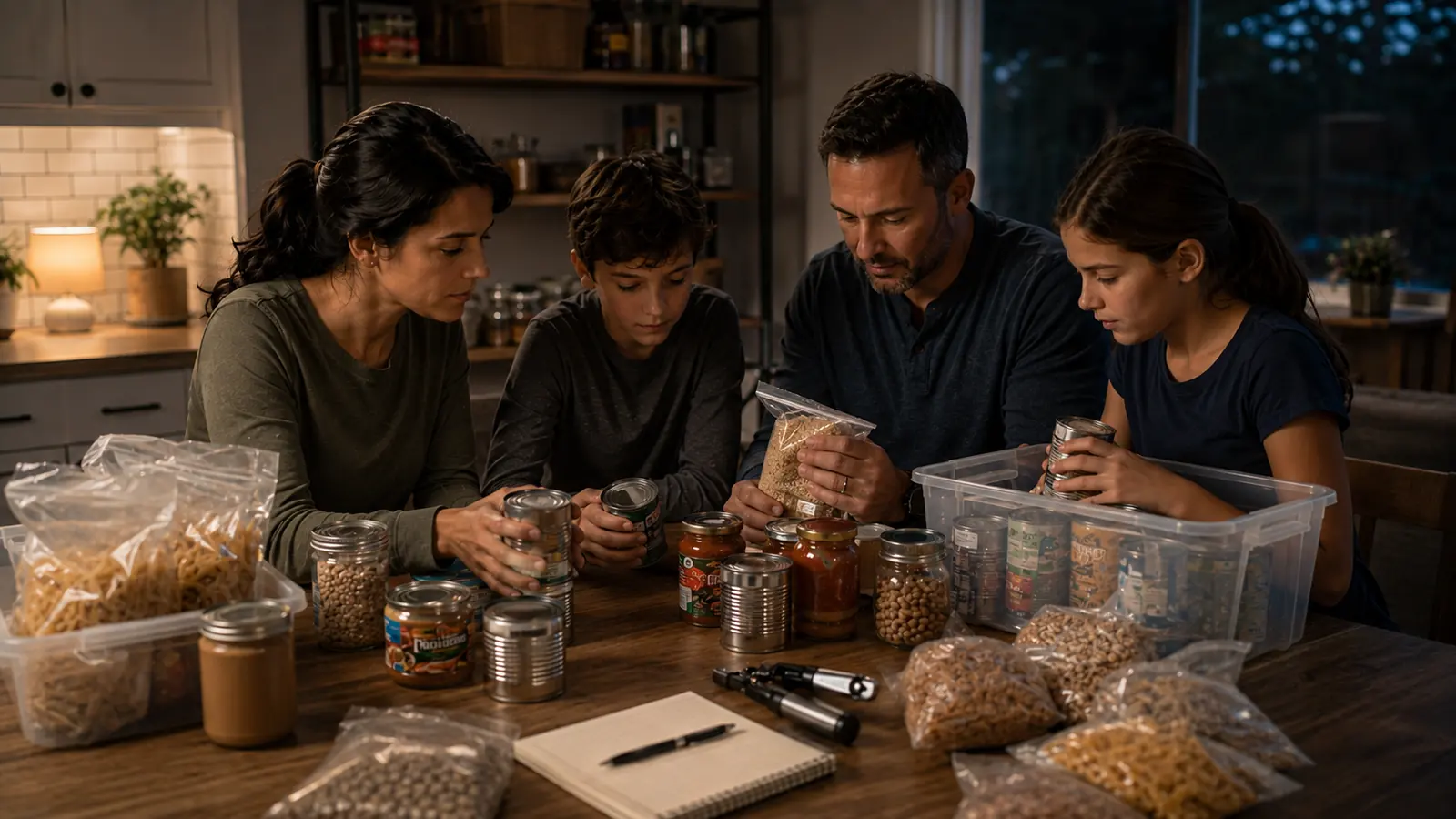
The safest outage meal may be the one that does not need cooking
Emergency food planning should account for the possibility that the normal stove, microwave or electric kettle is unavailable. Shelf-stable food that can be eaten cold or requires minimal preparation reduces dependence on fuel, water and appliances during the most disrupted period.
The Emergency Food Planner can help translate household size and duration into person-days and meal occasions before you choose foods.
Indoor combustion is the major safety boundary
CDC warns that charcoal grills, hibachis, lanterns, portable camping stoves and other fuel-burning equipment can produce carbon monoxide and should not be used inside a home, tent, camper, basement or garage. Carbon monoxide is colorless and odorless and can cause sudden illness or death.
Opening a garage door does not make a portable generator or grill an indoor-safe appliance.
A gas oven is not emergency space heating
Do not use a gas range or oven to heat the home. Combustion appliances used outside their intended conditions can create carbon-monoxide and fire hazards.
If indoor temperatures become dangerously hot or cold, the preparedness decision may be to move to a safer location rather than improvise heating with cooking equipment.
Separate cooking from food-safety decisions
During an outage, the refrigerator and freezer have limited safe holding times. Cooking questionable food does not reliably make every spoiled or contaminated food safe. Follow the Power Outage Food Safety guide and discard food when official guidance says it is unsafe.
Plan a low-energy cooking ladder
A useful plan can start with no-cook foods, then add low-energy electric options if backup power is available, and only then consider outdoor fuel-burning cooking where it can be operated safely.
The goal is not to recreate a normal kitchen at any cost. It is to keep people fed while preserving scarce energy and avoiding a new hazard.
- No-cook shelf-stable foods for the first meals
- Manual can opener where canned food is part of the plan
- Foods requiring little water
- Simple electric cooking only if battery capacity and output support it
- Outdoor fuel-burning equipment only where manufacturer and safety guidance allow
Water demand can increase when cooking
Dry staples can be compact but may require significant water and heat. In a water disruption, a food plan built entirely around rice, pasta or dehydrated meals can compete with drinking and hygiene needs.
Pair the food plan with the Emergency Water Calculator and keep drinking water as the priority baseline.
Generator-powered cooking still requires generator safety
If a generator powers an electric appliance, the generator itself still must remain outdoors and safely separated from the home. Review Generator Safety During a Power Outage before building that into the plan.
Choose foods around the equipment you will really have
If the plan assumes an electric can opener, induction burner and freezer full of ingredients, it may fail immediately when power is lost. Include a manual can opener where relevant and enough ready-to-eat food to cover the period before you decide whether cooking equipment is worth setting up.
Use outdoor cooking equipment only in a genuinely outdoor location
“Near an open door” is not the same as outdoors. Combustion appliances can produce dangerous carbon monoxide that enters through windows, doors or vents. Follow manufacturer instructions and public-safety guidance for placement and never move a grill or camp stove into a garage because of rain.
Battery cooking can consume energy quickly
Electric kettles, hot plates and microwave ovens may draw far more power than lights, phones or routers. A battery station that can easily cover communication for a day may lose much of its stored energy to a few cooking cycles.
If electric cooking is part of your outage plan, add the appliance to the Power Runtime Calculator instead of assuming the battery will last as long as it does with small electronics.
Prioritize foods already at risk
At the start of an outage, there may be a limited window to use refrigerated food safely. But do not repeatedly open the refrigerator to plan meals, because that lets cold air escape. Decide quickly, keep doors closed and follow official time and temperature guidance.
Keep hand hygiene in the food plan
Food preparation still requires clean hands and clean utensils when normal water service is disrupted. Pair the cooking plan with Hand Hygiene Without Running Water and safe stored-water practices.
Build a three-level menu
A practical emergency menu can have three levels: no-cook foods that work immediately, low-energy foods that need only brief heating, and ordinary meals that resume when power and water are reliable. This keeps the household from using scarce fuel or battery capacity on every meal.
What about propane, butane and camping appliances?
Portable fuel-burning appliances differ in design, but a household should not assume that “camping” means indoor-safe. Follow the manufacturer’s instructions and public-health guidance, and never use an appliance indoors when it produces combustion exhaust that requires outdoor operation.
Keep fire safety separate from carbon-monoxide safety
An appliance can create more than one hazard. Open flame can ignite nearby materials while combustion exhaust can create carbon monoxide. A setup that avoids one problem does not automatically solve the other. Stable placement, clearance, supervision and proper outdoor use all matter.
Design meals around the safest available method
The first question during an outage is not “What appliance can I improvise?” It is “What food can I eat safely with the least additional hazard?” Start with foods that require no heat, then foods that can be prepared with a low-energy electric appliance if safe power is available, and only then consider outdoor combustion equipment in an appropriate outdoor location.
This hierarchy reduces dependence on grills, camp stoves or generators when weather or living arrangements make outdoor operation difficult.
No-cook meals reduce several preparedness problems at once
Shelf-stable foods that can be eaten without heating save battery energy, fuel and water. They also reduce cleanup when running water is limited. Examples can include ready-to-eat canned foods, nut or seed butters where appropriate, shelf-stable milk, crackers, tortillas, dried fruit, packaged protein and other foods that fit the household’s dietary needs.
A manual can opener belongs in the kit if cans are part of the plan. Rotate foods through normal household use so emergency supplies do not become an unfamiliar collection nobody wants to eat.
Do not move outdoor combustion appliances into a garage
CDC warns that generators, grills, camp stoves and other gasoline-, propane-, natural-gas- or charcoal-burning devices can produce deadly carbon monoxide and should not be used inside a home, basement, garage or camper. An open garage door does not make a portable grill or generator an indoor-safe appliance. Keep combustion equipment outdoors and away from openings according to the applicable safety guidance and product instructions.
Battery cooking is clean at the point of use but energy intensive
Electric kettles, hot plates, induction cooktops, rice cookers and microwaves can draw hundreds or more than a thousand watts. A battery station may run them if its inverter supports the load, but repeated cooking can consume a large share of stored energy. A 1,000-watt appliance used for 15 minutes consumes roughly 250 Wh before accounting for conversion losses.
That may be reasonable for boiling water once, but not if the same battery also needs to protect refrigeration, medical devices and communications for days. Use the Power Runtime Calculator to see the trade-off.
Food safety determines what should be eaten first
During an outage, keep refrigerator and freezer doors closed as much as possible and follow current CDC food-safety guidance on time and temperature. Do not rely on smell or appearance to decide whether temperature-abused food is safe. When in doubt, discard food according to public-health guidance rather than trying to “cook it safe.”
Use foods at risk of spoilage only while they remain within safe conditions. Shelf-stable emergency food should be the fallback, not an excuse to consume refrigerated food after unsafe temperatures.
Water use can become the limiting factor
Some dry emergency foods require substantial clean water for preparation. If water service is interrupted or under an advisory, no-cook foods may preserve the drinking-water reserve. Plan cooking water separately from the household drinking baseline when your menu depends on rice, pasta, dehydrated meals or hot drinks.
Keep hygiene in the meal plan
Hand hygiene remains important when water is limited. Use safe water for food preparation and follow CDC emergency hygiene guidance. Keep utensils and food-contact surfaces as clean as conditions allow, and prevent raw or contaminated items from contacting ready-to-eat food.
A three-level outage menu is easier to execute
- Level 1 — no cook: foods that can be opened and eaten with minimal preparation.
- Level 2 — limited electric cooking: short, planned use of a battery-backed appliance when energy budget allows.
- Level 3 — outdoor fuel cooking: only where safe outdoor operation is possible and weather, fire risk and local restrictions allow it.
Write a few actual meals for each level. A pantry full of ingredients is not the same as a plan that works when the kitchen is dark and everyone is hungry.
Continue through the topic hub
See the Emergency Food & Cooking hub for related decisions, tools and guides.
Pick the cooking method before the outage
Sort planned meals into three groups: ready to eat, safe to prepare with no heat, and dependent on cooking. Check which foods you can actually prepare without refrigeration or a powered kitchen. Prioritize ready-to-eat options when conditions are uncertain.
Never use charcoal grills, camp stoves, gasoline generators or other fuel-burning equipment indoors, in garages or near openings: carbon monoxide can accumulate quickly. Only use appliances as their manufacturers direct and in locations explicitly suitable for their use.
Sources & references
PrepMorrow prioritizes authoritative U.S. guidance for safety-critical preparedness information. Sources were reviewed for this guide before publication.