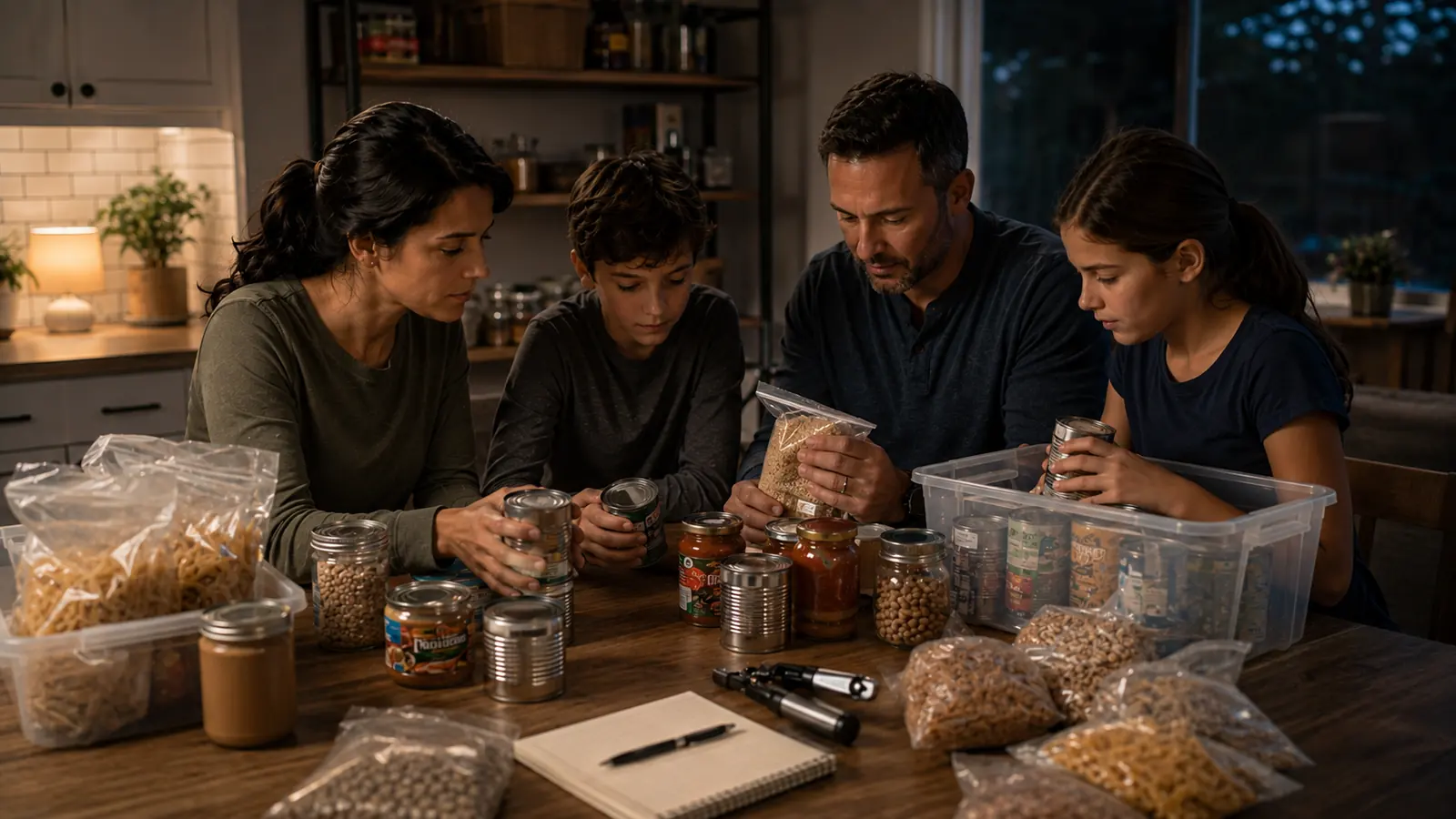
The best outage foods are not a universal list of products. They are foods your household will eat that can remain safe without refrigeration, can be prepared with the water and equipment you expect to have, and fit any dietary or medical needs.
Power outages change food priorities over time. Early in an outage, households may focus on keeping refrigerated and frozen food safe. As the disruption continues, shelf-stable foods become increasingly important because they reduce pressure to open the refrigerator or improvise unsafe cooking methods.
Start with foods that need no cooking
Ready-to-eat foods are the easiest outage layer because they work when the stove, microwave and other electric appliances are unavailable. Examples may include shelf-stable proteins, crackers, nut or seed products where appropriate, canned foods with a manual opener and other familiar shelf-stable foods.
Choose based on the actual household. Age, allergies, swallowing needs, dietary restrictions and medication-related food requirements may make common emergency-food suggestions unsuitable.
Add low-preparation foods for longer outages
If the household has a safe cooking plan, foods needing brief heating or simple preparation can add variety. Keep required water and fuel in mind.
Avoid making the core menu depend on one appliance. If backup power is reserved for refrigeration, medical devices or communication, electric cooking may not be the best assumption.
Use canned food strategically
Canned foods can provide shelf-stable meals with relatively little preparation and may include liquid, reducing cooking-water demand. Keep a manual can opener with the supply and follow storage guidance on the label.
Cans are heavier than dry foods, making them more practical for stay-at-home supplies than evacuation bags. Portability should influence what is duplicated in a go kit.
Store foods the household already rotates
Routine rotation is one of the easiest ways to reduce waste. Buy shelf-stable foods that fit normal meals, use older stock first and replace what is consumed.
Specialty long-storage foods may have a role, but they should not hide questions about preparation water, fuel needs and whether household members will actually eat the food under stress.
Protect refrigerated food separately
CDC guidance distinguishes refrigerated and frozen food from shelf-stable supplies. Keep refrigerator and freezer doors closed as much as possible and follow current food-safety recommendations when deciding what to discard.
Never taste questionable food to decide whether it is safe. Food can be unsafe even when its smell and appearance seem normal. A stocked shelf-stable menu makes it easier to leave questionable perishables alone.
Include familiar snacks and comfort foods
Emergencies disrupt routines, especially for children. Familiar snacks and comfort foods can make a multi-day outage easier when they fit dietary needs and storage conditions.
They are not a replacement for safe water or complete meals, but a realistic household plan can include them after the core requirements are covered.
Store food where conditions are reasonable
Heat, moisture, pests and physical damage can shorten the useful life of stored food. A cool, dry, accessible indoor location is generally preferable to an uncontrolled hot garage when packaging instructions call for normal room-temperature storage.
Split supplies when one location is vulnerable. A flood-prone basement should not be the only place the household stores all food and water.
Compare foods by what happens after opening
| Type | Useful role | Check before counting it |
|---|---|---|
| Ready-to-eat canned or pouched foods | Main meal ingredients without an electric stove | Opener, pack size and whether everyone can eat them |
| Crackers, cereal and shelf-stable spreads | Simple combinations and snacks | Allergies, serving quantities and storage labels |
| Shelf-stable milk or drinks | Familiar breakfast ingredients | Refrigeration instructions after opening |
| Dry staples and dehydrated meals | Longer pantry reserve | Safe water, cooking time and a safe heat source |
“Shelf-stable” describes storage before opening under the labeled conditions. It does not mean every opened package can sit out through a long blackout. If your family cannot finish a large container and has no reliable refrigeration, smaller packages may be more practical even when the price per ounce is higher.
Build a no-cook day before buying a long-storage kit
Put the actual ingredients for breakfast, lunch, dinner and snacks on a counter during normal conditions. Include utensils, the can opener and any drinking or preparation water. Ask each person whether those combinations are realistic meals for them. This is a menu check, not a challenge to endure an inadequate diet.
A family might pair cereal with small shelf-stable milk containers for breakfast, use ready-to-eat protein with crackers and fruit at lunch, and keep another complete ready-to-eat combination for dinner. Adapt the ingredients to allergies and usual eating habits. If the “meal” is only crackers, check what else makes it satisfying and suitable rather than buying more crackers.
Repeat the exercise for a second day with different ingredients. It reveals missing openers, drinks that need chilling and foods that household members will not eat. Record the packages consumed by one day before multiplying by the duration. Use the emergency food quantity guide for that calculation.
Keep the refrigerator decision separate from the pantry menu
The pantry reserve should work even if perishables have to be discarded. For temperature and outage-time decisions, follow the refrigerator and freezer safety guide and the linked CDC guidance. If you choose foods that require heating, check safe cooking without power before counting them as part of the dependable menu.
Explore the full topic
Continue through the Emergency Food & Cooking hub for related household planning, tools and decision paths.
Sort by preparation dependency
Divide food into ready-to-eat items, foods requiring only safe water, and foods requiring heating. For each, verify the storage conditions and whether it remains practical without refrigeration, tap water or a functioning stove. Select familiar shelf-stable meals that cover your household’s allergies and restrictions, and rotate stock by package guidance.
Sources & references
Content recovery reviewed October 12, 2026. Food-selection examples focus on preparation and opened-package storage; CDC supplies the food-safety reference. Existing references are retained; this review does not certify every linked document.